Want to be in the loop?
subscribe to
our notification
Business News
FOREIGN FIRMS SNATCH UP LOCAL LOGISTICS INDUSTRY
Vietnam’s existing logistics market is valued at about $50 billion. There are around 1,300 logistics firms, 5 per cent of which are foreign-invested companies dominating the market with a share of approximately 75 per cent. Most local firms are small-scale companies with limited capital and human resources.
“Realising the growing and increasingly liberal logistics market, many global logistics companies have strengthened their presence in Vietnam,” said a recently released Seiko report on Vietnam’s logistics industry.
For instance, Hong Kong’s Kerry Integrated Logistics bought Vietnamese Tin Thanh’s stakes to set up Kerry TTC. DHL Vietnam offers comprehensive shipping and e-commerce solutions to support the expansion of domestic and cross-border online trade. Gefco Sotrans, a joint venture of the European leader in automotive logistics Gefco Group, and one of well-known local logistics firms, Sotrans, has officially received its investment certificate. The company will offer a comprehensive logistics service for the car and two-wheeler industry, covering warehousing, the supply of components, vehicle and spare parts distribution, and the custom clearance of imported cars.
Le Hoang Oanh, vice president of local Avina Logistics JSC, told VIR that many South Korean and Japanese firms currently wanted to buy Avina, which had a network of partners from 60 nations worldwide, and which grew 20 per cent last year.
“In addition to our firm, many other local firms are also on the radar for foreign firms,” Oanh said. “I believe that in the near future, Vietnam’s logistics market will be totally controlled by foreign firms.”
Beketzhan Zhumakhanov, Kazakshtani Ambassador to Vietnam, said that in the months to come a delegation of transport firms from his nation would come to Vietnam in search of investment opportunities.
“Vietnam’s economy is strongly growing, with a population of more than 90 million people. This has pushed up the demand for transport and created opportunities for Kazakshtani firms,” Zhumakhanov said.
Yerzhan Zhakishev, vice president of United Transport Logistics Company – a joint venture between the three largest railway firms from Russia, Belarus, and Kazakshtan, also said that this firm wanted to co-operate with Vietnam Railways to expand its operation in Vietnam.
According to Oanh, many logistics joint venture companies in Vietnam will likely become wholly foreign-invested in the future. Initially, foreign firms want to establish joint ventures with local companies as a way to gradually control the local market, before growing into a wholly foreign-invested company.
For example, a joint venture between Japan’s Nippon Express and Vietnam’s Transimex will end its operation in 2018. At this point, the joint venture is expected to become a wholly Japanese invested firm. To expand its logistics business in Vietnam, Nippon Express has established Nippon Engineering-Vietnam, which also operates in logistics, in addition to construction, design, and consultancy.
In Vietnam, the market access barriers for logistics are almost all removed. According to Vietnam’s World Trade Organization (WTO) service sector commitments, as of January, 11, 2014, foreign investors are permitted to provide most types of logistics services in the country subject to proper licensing requirements.
Still, the problem is that foreign investors suffer differences in the understanding and application of local investment licensing agencies.
In September 2015, the Ministry of Industry and Trade issued Dispatch No.9911/BCT-KH on creating a roadmap to open up the market for foreign logistics investors. It clearly states that the local authorities should directly apply related provisions under Vietnam’s WTO commitments, which use the United Nations’ Central Product Classification (CPC) codes. For example, the following sectors are now open to wholly foreign-invested enterprises: storage and warehousing services (CPC 742), and freight transport agency services (CPC 748). In addition, a number of sectors require joint ventures with Vietnamese partners, such as freight transport services by sea-going vessel (CPC 7212), freight transport services by non-sea-going vessel (CPC 7222), and freight transport services by railway (CPC 7112).
Source: VIR
Related News
MEMBER CORNER / PROMOTIONS
SENTRYSAFE CHW20201 - EFFECTIVE WATER RESISTANCE, MAXIMUM PROTECTION
In unexpected flooding situations, the most important thing is to keep your valuables dry and intact. SentrySafe CHW20201 is specially designed with superior water-resistant capabilities, helping protect documents, cash, and important belongings even when fully submerged. Proven in real testing: After water submersion, the documents inside remain dry - undamaged.

MEMBER CORNER / PROMOTIONS
AN ELECTRIFYING NIGHT WITH THE "QUEEN OF DANCE" THU MINH AT THE GRAND HO TRAM!
The stage at The Grand Ballroom is set to catch fire as Vietnam’s undisputed "Queen of Dance," Thu Minh, takes the spotlight. Renowned for her powerhouse vocals, magnetic stage presence, and sultry, high-energy performances, Thu Minh promises an evening of pure musical euphoria. The energy escalates with an exclusive appearance by special guest and The Voice champion, Vu Thao My.

HR / LABOUR/ EMPLOYMENT
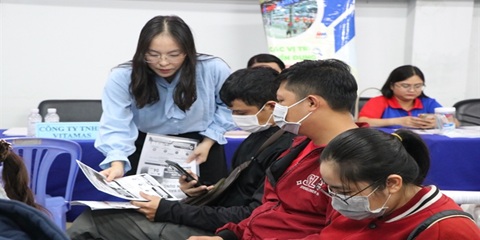
HIGH-QUALITY HUMAN RESOURCES NEEDED TO ATTRACT NEW TECH INVESTMENT CAPITAL
Besides infrastructure, Việt Nam must also rapidly develop a highly skilled workforce to attract investment in AI, semiconductors and advanced manufacturing, experts have said. Don Lam, CEO and co-founder of investment management company VinaCapital, said that global technology investors were increasingly looking at the readiness of the entire ecosystem, with high-quality human resources a decisive factor.
HR / LABOUR/ EMPLOYMENT
HIRING OUTLOOK STRENGTHENS IN Q4 AS SKILLS SHORTAGES PERSIST
Hiring intentions among employers in Việt Nam strengthened in the fourth quarter, with 52 per cent of surveyed companies planning to increase headcount between October and December, according to a ManpowerGroup survey released this week. Việt Nam's hiring outlook was stronger than the Asia Pacific and Middle East (APME) regional average of 33 per cent and the global average of 29 per cent, ranking third in the region and 11th globally among 42 markets surveyed.
BANKING / FINANCE / INSURANCE / TAX
LARGE BANKS FORECAST TO GAIN HIGHER PROFITABILITY IN H2 2026
The return on average assets (ROAA) of the banking sector will likely remain stable at around 1.5 per cent in the second half of 2026, but profitability divergence among banks will increase, with large banks outperforming peers on stronger margins and diversified earnings, analysts forecast. In a recent report on the banking sector, analysts from the Vietnam Investors Service Rating said the sector’s ROAA rose by 10 basis points quarter-on-quarter to 1.51 per cent in the first half of this year, driven by net interest margin (NIM) improvements at some State-owned banks and large private banks.
GARMENT / TEXTILE
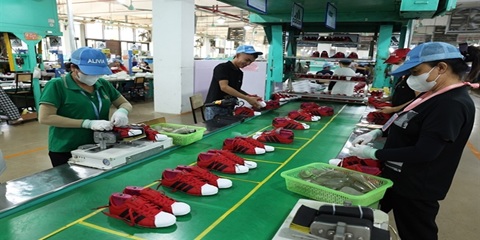
VIỆT NAM'S FOOTWEAR, BAG EXPORTS TO US TOP $8 BILLION IN EIGHT MONTHS
Việt Nam's exports of footwear and handbags to the US exceeded US$8 billion in the first eight months of 2026, as the US and EU remained the country's biggest markets despite sluggish growth in footwear shipments. Exports from Việt Nam's leather and footwear sector reached more than $2.45 billion in August, down 9 per cent from July but up 3 per cent from a year earlier, according to preliminary statistics.
Events Sponsors






















